The Growing Role of Data Analytics & Data Science in Auditing, Accounting, and Finance
Over the past few years, I have observed a significant global trend: Data Analytics and Data Science are becoming core competencies for Auditing, Accounting, and Finance professionals.
One recent example is the redesign of the ACCA qualification structure, which now places greater emphasis on Data Analytics and Data Science concepts. ACCA is also preparing to launch its new Data Science Professional (SDS) qualification in the coming year, demonstrating the increasing importance of analytical skills within the finance profession.
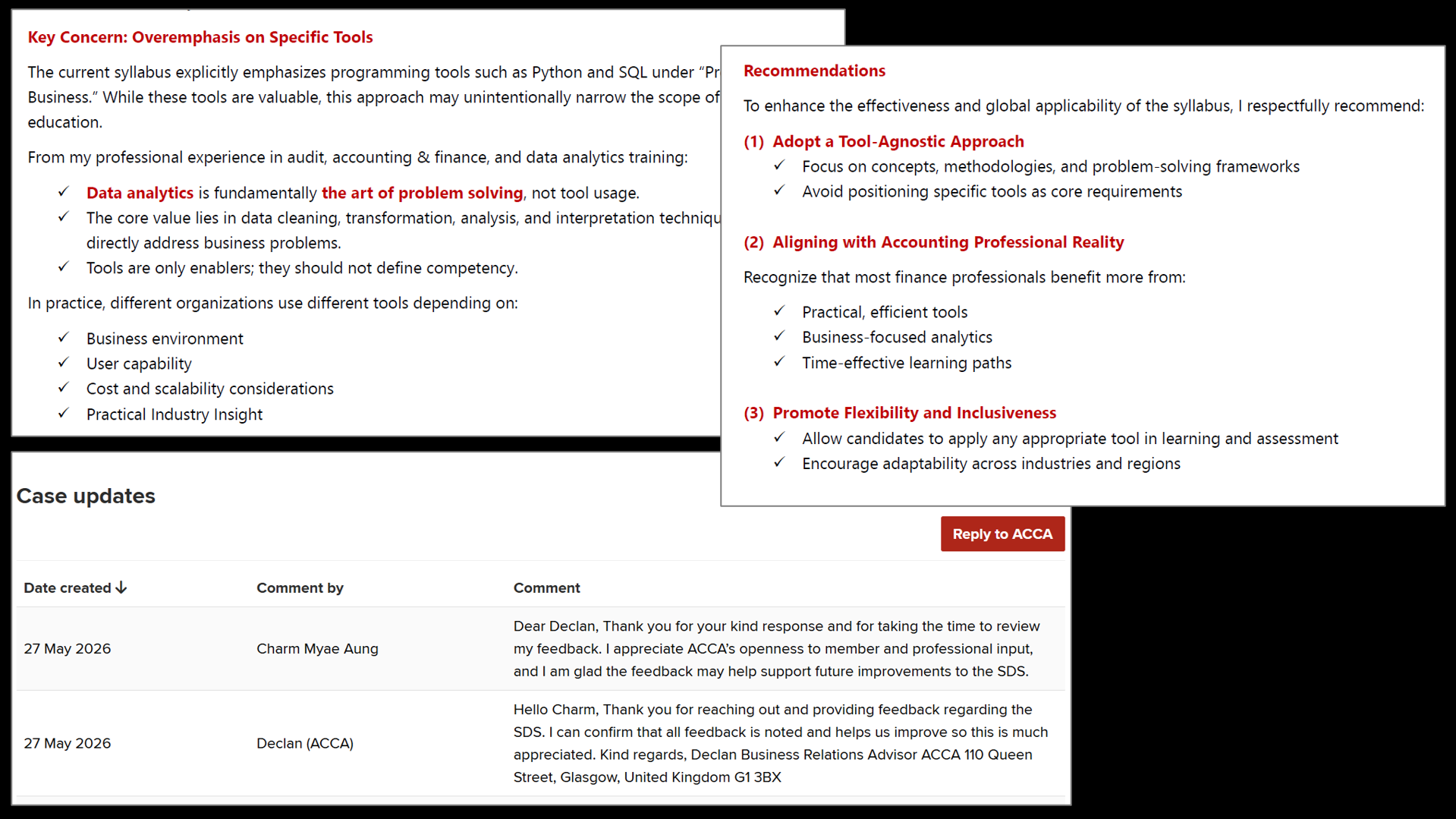
After reviewing the SDS syllabus, I found that Python and SQL are currently positioned as required technical skills. A few days ago, I provided feedback to ACCA suggesting that they consider adopting a tool-agnostic approach rather than focusing primarily on specific tools.
My perspective is simple:
Data Analytics is fundamentally the art of solving business problems, not the art of using a particular tool.
Tools are important, but they should serve the analytical process—not define it.
For Auditing, Accounting, and Finance professionals, I strongly believe that KNIME is one of the most suitable platforms for learning and applying Data Analytics and Data Science. Its visual workflow approach allows professionals to focus on understanding business problems, data, risks, controls, and insights, while still providing access to advanced analytics, machine learning, Python integration, and AI capabilities when needed.
As a KNIMEr from Myanmar, I will be placing greater focus in the coming months on helping Auditing, Accounting, and Finance professionals learn:
✅ Data Analytics
✅ Data Science
✅ KNIME Analytics Platform
I believe the future of the profession belongs to those who can combine domain expertise with analytical thinking and data-driven decision-making.
I would be interested to hear the perspectives of other KNIME community members:
Do you think professional qualifications should focus on specific tools, or should they adopt a tool-agnostic approach that emphasizes problem-solving and analytical thinking?